Blogs
Turbo Diesel Blowing Black Smoke On Acceleration: What’s Really Happening

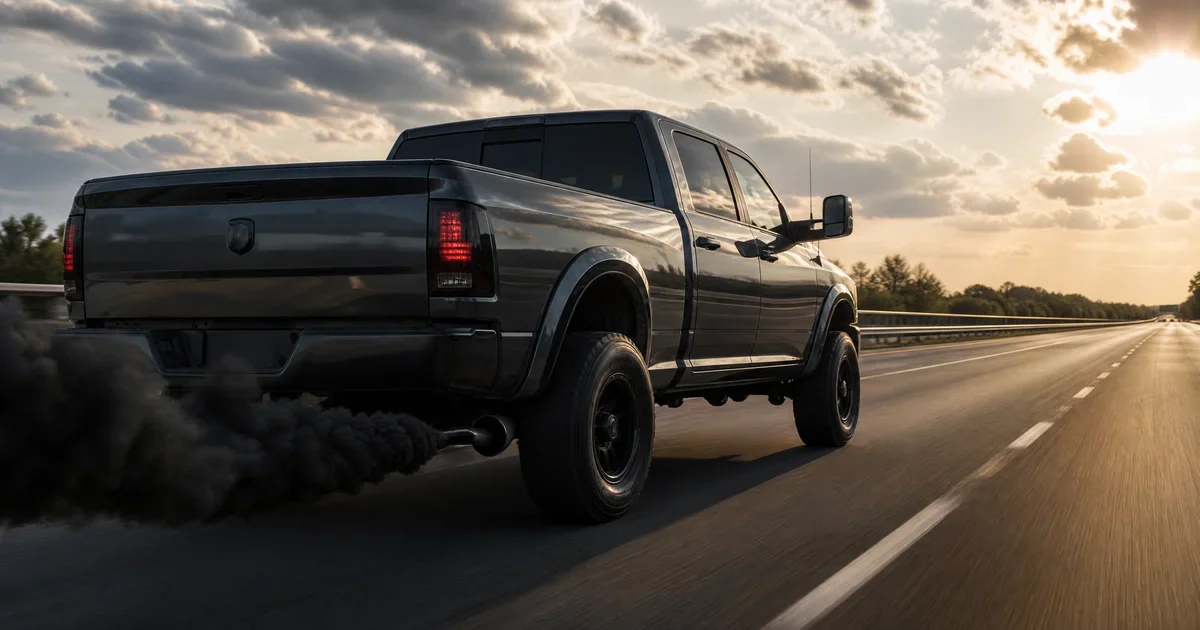
You hammer the throttle to merge onto the freeway, and you’re leaving a dark cloud behind you. People in the lane next to you can see it, your mirrors are telling you it’s real, and now you’re wondering whether your truck is on its way out or if this is something straightforward.
A turbo diesel blowing black smoke on acceleration is one of the more common complaints diesel owners bring to a shop, and the root cause almost always comes back to the same fundamental problem: more fuel than there is air to burn it properly. But what’s disrupting that balance, and how serious is it? Let’s get into the real causes.
Why Black Smoke Is Always About Combustion Balance
Black smoke is made of partially combusted carbon particles. Every time your engine accelerates, it demands more fuel and more air simultaneously. If the air side of that equation can’t keep up with the fuel side, you get incomplete combustion and unburned carbon exits the exhaust as black smoke. A brief puff on hard acceleration in an older diesel can be normal due to turbo lag, but persistent or heavy black smoke in a modern truck signals something that needs fixing.
Air Filter And Intake Restrictions
The single most common and easiest-to-fix cause of a turbo diesel blowing black smoke on acceleration is a restricted air filter. When the air filter is clogged, the engine starves for oxygen under load. The ECU continues fueling at the commanded rate, but the air can’t match it, so soot exits the exhaust. This is always the first place to check, and it’s often the fastest and cheapest resolution.
Turbocharger Problems
Your turbocharger is responsible for forcing compressed air into the combustion chamber. A turbo that’s worn, damaged, or not spooling to full boost delivers less air than the engine expects under load. That air deficit is exactly the environment where turbo diesel blowing black smoke on acceleration happens most dramatically. Leaking intercooler boots or cracked charge air hoses have the same effect, since compressed air escapes before reaching the engine.
Fuel Injector And EGR Issues
Stuck or worn fuel injectors that deliver more fuel than commanded create an over-fueling condition that produces black smoke even when airflow is adequate. A malfunctioning EGR system that introduces excessive exhaust gases into the intake can also reduce the effective oxygen available for combustion. Both issues tend to produce smoke across a wider RPM range rather than just at peak acceleration.
Stop Guessing, Start Diagnosing
Persistent turbo diesel blowing black smoke on acceleration is doing real damage to your DPF and costing you fuel economy with every mile. Frequent regens often accompany this kind of soot buildup, so review our guide on how often should a truck regen to understand the connection. Our commercial vehicle repair and 24/7 mobile truck repair teams diagnose the root cause rather than chasing symptoms, serving truck operators throughout Vancouver and the Portland metro. Avanti Fleet will find what’s disturbing your combustion balance. Contact us today and get your truck running clean again.