
Blogs
Why Is My Truck Air Dryer Constantly Purging?

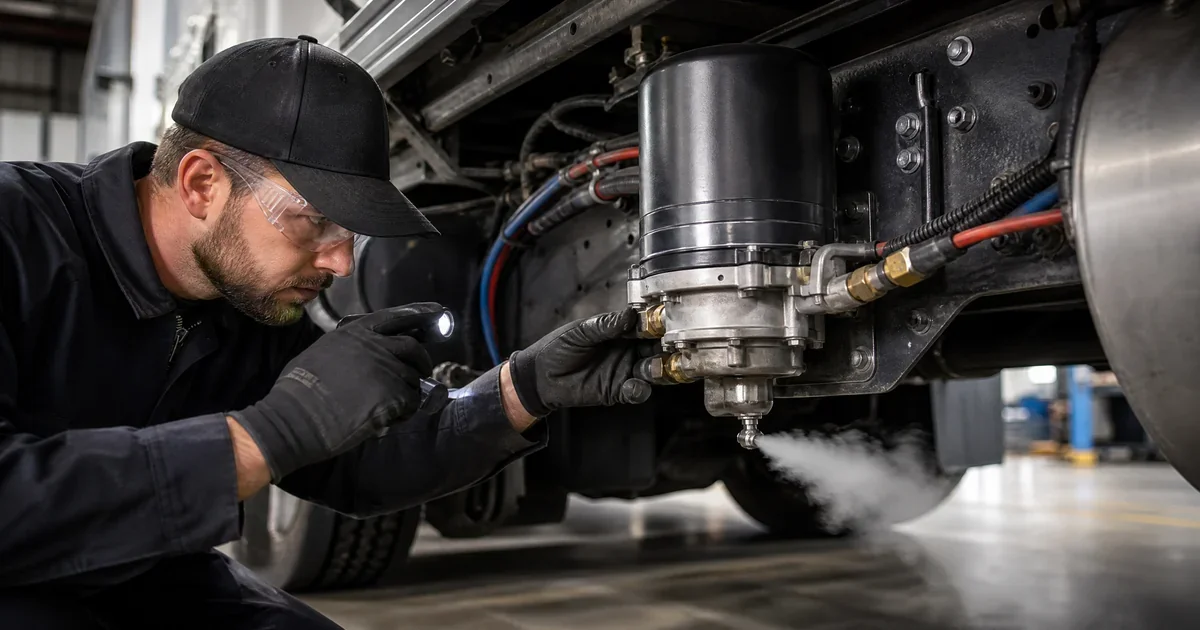
That rhythmic blast of air you keep hearing from under your truck isn’t something to tune out. If your air dryer is cycling far more often than it should, your entire air brake system is trying to tell you something. A quick purge during compressor unloading is completely normal. But when the purging becomes continuous or happens every few seconds, you’re looking at a real problem that deserves immediate attention.
A truck air dryer constantly purging puts extra wear on your compressor, wastes system pressure, and can eventually leave you without enough air to brake safely. Understanding what triggers this cycle is the first step to getting it back under control. Our truck brake repair technicians see this issue regularly and can trace it to its source.
What the Air Dryer Is Supposed to Do
Your air dryer sits between the air compressor and the wet tank. Its job is to strip moisture, oil vapor, and contaminants out of the compressed air before it reaches your brake chambers, suspension system, and other air-operated components. When the compressor unloads and reaches cutout pressure, the dryer receives a signal and purges, releasing trapped moisture and resetting the desiccant cartridge for the next cycle. Normal purge intervals on a healthy system vary by truck, but most sit somewhere between every few minutes at idle to every 30 minutes or more on newer models. A truck air dryer constantly purging indicates this cycle is being triggered far too often.
Air Leaks Are the Most Common Trigger
When your air system has leaks anywhere downstream, pressure bleeds off faster than it should. The compressor has to work harder and cycle more frequently to keep the tanks topped up, and every time the compressor unloads, the air dryer purges along with it. Using soapy water on every fitting, line, valve, and chamber connection will reveal even small leaks as bubbles. A truck air dryer constantly purging is often nothing more than a system that can’t hold pressure because air is escaping somewhere it shouldn’t. This kind of leak diagnosis is part of what commercial vehicle repair specialists handle on every visit.
The Governor and Purge Valve Are Next on the List
The governor controls when the compressor loads and unloads by sensing system pressure. If the signal line between the governor and the compressor has a leak, even a hairline crack in the braided hose, the compressor will cycle on and off constantly without reaching proper cutout pressure. Every cycle means another purge. The purge valve itself is also worth inspecting. A worn diaphragm, debris preventing proper seating, or a stuck purge valve can cause constant air exhaust that mimics the purging behavior. Replacing a purge valve is one of the most inexpensive fixes you can make when dealing with a truck air dryer constantly purging situation.
Don’t Overlook the Air Dryer Cartridge
A saturated or clogged desiccant cartridge can no longer effectively absorb moisture, which causes the system to cycle repeatedly as it struggles to condition the air. Most manufacturers recommend replacing the cartridge annually or at every preventive maintenance interval. If the cartridge has been overlooked during service, it’s worth swapping it out as part of your diagnostic process. However, if the cartridge replacement doesn’t resolve a truck air dryer constantly purging condition, the root cause lies elsewhere in the system. You might also want to review our guide on how to check disc brakes on a semi truck as part of your overall preventive maintenance routine.
Get It Diagnosed Before the Compressor Pays the Price
Running your compressor hard and continuously is a fast way to shorten its life. Avanti Fleet’s mobile diesel technicians diagnose and repair air system issues for commercial trucks throughout Vancouver and the Portland metro, tracing excessive purge cycles back to their actual cause rather than replacing parts at random. Contact us to get your air system inspected before a fixable leak turns into a compressor replacement.