Blogs
How To Check Disc Brakes On Semi Truck: A Practical Guide

Air disc brakes have become increasingly common on modern commercial trucks, and for good reason. They offer better fade resistance at high temperatures, more consistent stopping power, and lighter weight compared to traditional drum systems. But they also require a slightly different inspection approach, and a lot of drivers who are very comfortable checking drum brakes find themselves less confident when it comes to the disc setup.
Knowing how to check disc brakes on semi truck configurations is a core competency for any driver or fleet manager who wants to stay ahead of DOT compliance and catch brake wear before it becomes a safety issue. Here’s a practical walkthrough of what you need to look at.
Start With A Cold System
Always begin your brake inspection when the system is cold. Disc brakes that have been working hard retain heat, and components that look fine at operating temperature can show different characteristics once cooled. Check cold first to establish your baseline before you apply the brakes or take the truck for even a short movement.
Visual Inspection Through The Wheel
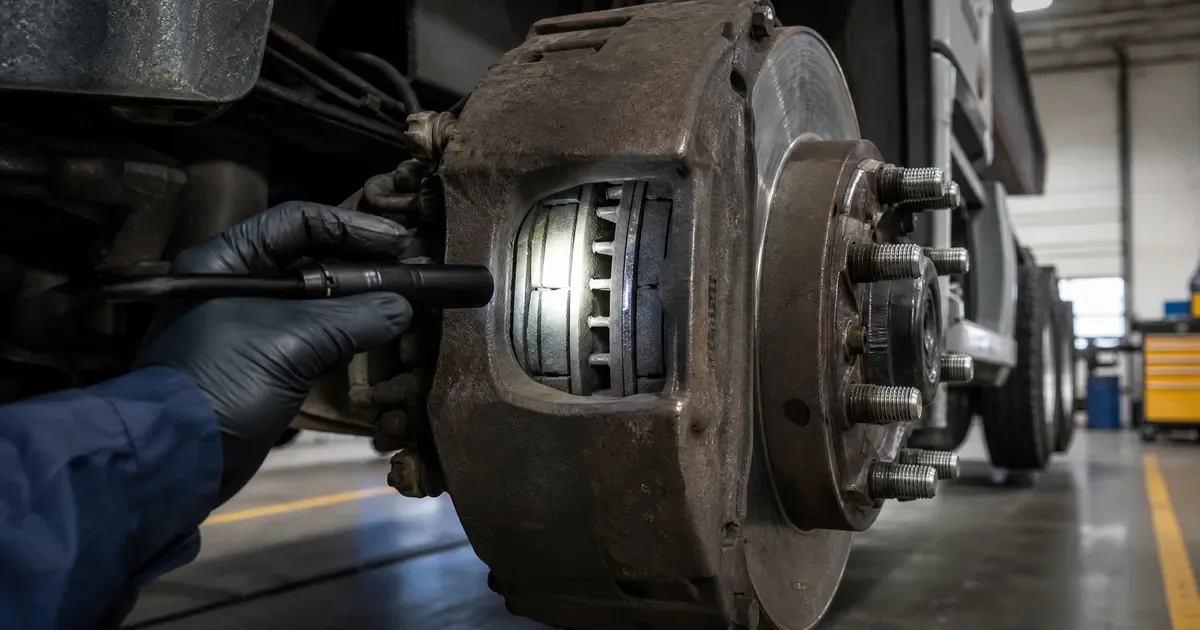
Many modern trucks allow you to see the brake caliper and rotor through the openings in the wheel without removing anything. A lighted telescoping mirror is the most practical tool for this job. Look for pad thickness on both sides of the rotor, any obvious cracking or deep scoring on the rotor surface, and whether the caliper body appears damaged or leaking. CVSA guidelines state that pad lining should measure at least 3mm to remain in service.
Check Rotor Condition And Caliper Function
When learning about disc brake checks on semi truck systems, the rotor is a critical checkpoint. Deep grooves, heat cracking, or a heavily corroded surface all indicate the rotor needs attention. With the brakes released, there should be slight caliper movement at the wheel. With brakes applied, both caliper pistons should engage evenly on both sides of the rotor without sticking or uneven pressure. If your truck pulls when braking, our guide on why a truck pulls to the right when braking explains what to check.
Air System And Chamber Checks
Even on air disc brake systems, the air chambers and supply lines matter. Check for audible air leaks around the chamber and supply fittings, verify the chamber size matches what’s required for the axle position, and confirm there are no leaks from the spring brake side of the chamber when the brakes are released. Drain any water from the air system if you notice reduced brake response.
Don’t Leave Brake Checks To Chance
Understanding how to check disc brakes on semi truck rigs keeps you informed, but some issues require professional measurement and diagnosis that goes beyond a visual check. Our truck brake repair and DOT truck inspection services throughout Vancouver and the Portland metro provide the thorough assessment your braking system deserves. Avanti Fleet can verify your brake system is road-ready. Contact us to schedule brake service before your next DOT inspection.