
Blogs
How to Fix Brake Chamber Leaking Air from a Hole?

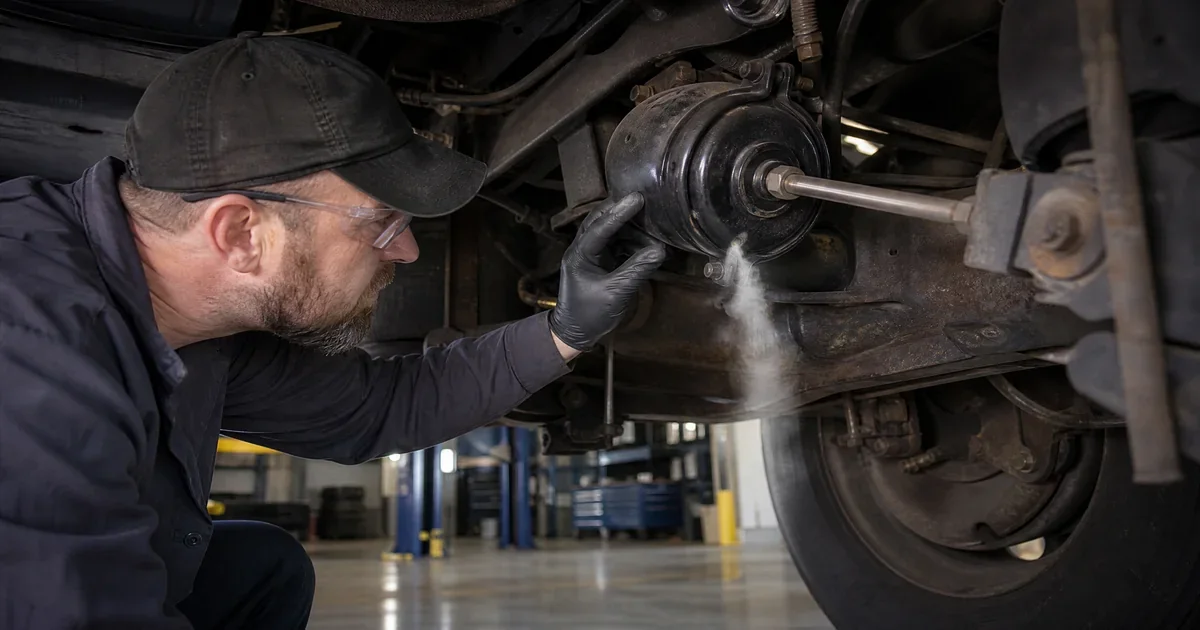
You hear a hissing sound coming from your wheel end, and your air pressure isn’t holding the way it should. A quick look confirms your fears: air is escaping from somewhere around the brake chamber. This is not a situation to drive through and monitor. A brake chamber leaking air from a hole is a safety-critical failure that directly affects your ability to stop.
The good news is that identifying the source and understanding what needs to happen next is straightforward once you know what you’re looking at. Our truck brake repair team handles these cases daily, and the diagnostic process is the same every time.
How Air Brake Chambers Work
Your truck’s air brake chambers convert air pressure into the mechanical force that pushes your brake shoes against the drums. Each wheel end has a chamber with a flexible diaphragm inside. When you apply the brakes, air pressurizes one side of that diaphragm and pushes the pushrod out, activating the brakes. The spring brake side of the chamber holds the parking brake spring. When a brake chamber leaks air from a hole, it means either the diaphragm has failed, the chamber body is cracked, or a seal or fitting has degraded to the point where air can no longer stay contained.
Finding the Leak Accurately
Spray a soap and water solution around every part of the chamber: the clamp band where the two halves join, the pushrod boot, the inlet fittings, and along any visible surface of the chamber body. Bubbles will form at the exact location of a brake chamber leaking air from a hole. Listen for a hiss with the brakes applied and released separately, since some leaks only appear under one condition. A hiss on brake application points to the service diaphragm. A hiss with the brakes released and the spring brake engaged points to the hold-off circuit. Getting the source right before attempting a repair saves you from replacing the wrong component. This level of precision is what separates a proper truck suspension and brake repair from guesswork.
What Causes the Diaphragm to Fail
The diaphragm is made of reinforced rubber that flexes thousands of times every day. Road salt, heat cycling, age, and physical damage from debris all accelerate deterioration. When a diaphragm develops a crack or hole, you’ll often hear a hissing or popping sound during brake application, and brake response will feel spongy or slower. A brake chamber leaking air from a hole caused by a failed diaphragm requires either a diaphragm kit replacement or, in many cases, a complete chamber replacement, since the parts cost difference is often minimal and a full replacement gives you full confidence in the repair.
Why a Cracked Chamber Body Is More Serious
If your soap test reveals bubbles coming from the chamber body itself rather than a seal or fitting, that’s a chamber that needs to come off. Cracked aluminum or corroded steel chambers are not candidates for patching or sealant. Operating with a cracked chamber creates an uncontrolled leak that will worsen under the vibration of daily operation, and the spring inside a spring brake chamber exerts more than 300 pounds of force. This is not a repair to attempt without the correct cage bolt or caging tool to safely contain that energy before the chamber is removed. Issues like this often go hand in hand with trailer ABS light problems that signal deeper brake system faults.
Don’t Wait on a Brake Chamber Leak
A brake chamber leaking air from a hole is a DOT out-of-service violation waiting to happen, and more importantly, a safety risk for you and everyone on the road around you. Avanti Fleet’s brake specialists serve commercial operators throughout Vancouver and the Portland metro with mobile and in-shop brake chamber inspection and replacement. Get in touch with us immediately if you’re dealing with an active air brake leak.