
Blogs
Forced Regen Vs Passive Regen: What Every Diesel Owner Should Know

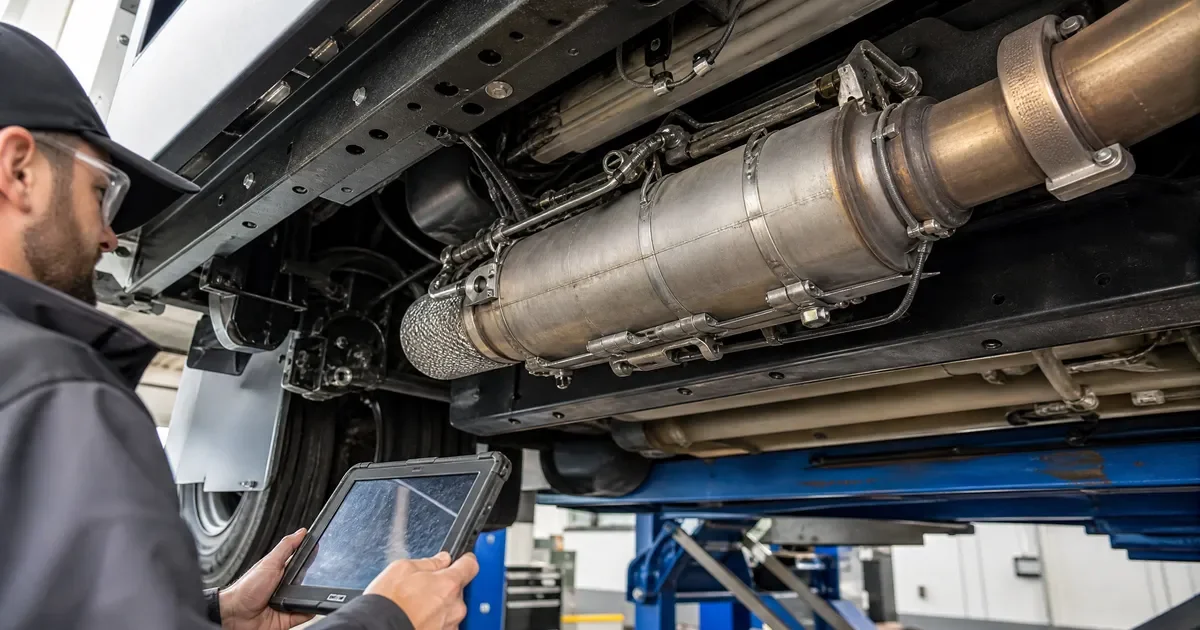
Your truck’s diesel particulate filter has one job: trap the soot that would otherwise blow out of your exhaust. But trapped soot has to go somewhere, and that’s where regeneration comes in. It’s the process that burns that accumulated soot away before it chokes your filter and sends your engine into protection mode.
Most drivers hear the terms and nod along, but when it actually matters, knowing the real difference between forced regen vs passive regen can save you time, money, and a lot of frustration on the side of the road. Let’s break it down clearly so you always know exactly where your engine stands.
What Passive Regen Actually Looks Like
Passive regen is the quietest version of the process, and most drivers never even notice it happening. When your exhaust temperature stays consistently high enough, typically between 480 and 750 degrees Fahrenheit during sustained highway driving, the soot in your Diesel Particulate Filter (DPF) oxidizes naturally in the background. No warning lights, no added fuel, no change in how your truck drives. It just happens. Trucks that run a lot of highway miles tend to stay cleaner for this exact reason, since passive regen is constantly doing small amounts of housekeeping along the way.
When Active Regen Takes Over
When your duty cycle involves more city driving, short hauls, or lots of idle time, exhaust temperatures stay too low for passive regen to keep up. That’s when your engine’s ECU steps in and triggers active regen. It introduces extra fuel into the exhaust stream to spike temperatures high enough to burn off the accumulated soot, typically reaching around 1,100 degrees Fahrenheit. You might notice a slight increase in engine noise or a change in exhaust smell during the cycle, which usually runs for 20 to 45 minutes. As long as you keep driving and don’t shut the engine down partway through, it completes on its own.
Forced Regen Vs Passive Regen: The Key Difference
Here’s where most people get confused in the forced regen vs passive regen conversation. Forced regen is not something the truck initiates on its own. It’s a manually triggered, stationary cycle that requires a diagnostic tool operated by a certified technician. It becomes necessary when soot loading has climbed past the threshold where active regen can still handle the job, usually when the DPF is more than 80 to 85 percent loaded. The vehicle has to be parked, the engine running, and the regen cycle must complete fully without interruption. Understanding forced regen and passive regen matters because forced regens are a signal that something in your operating cycle is causing excessive soot buildup.
Why Frequent Forced Regens Are A Warning Sign
If your truck is requiring forced regens more often than it should, that pattern points toward an underlying problem rather than just a dirty filter. Short route cycles, engine issues causing over-fueling, EGR problems, or a DPF that’s loaded with ash rather than soot are all possible culprits. Ash, unlike soot, does not burn off during regen cycles and requires professional filter cleaning to remove.
Get On Top Of Your DPF Health
Understanding forced regen vs passive regen puts you ahead of most operators when it comes to protecting your emissions system. If your truck has been throwing regen warnings frequently, or you’ve been told you need a forced regen more often than expected, it’s time to have the system looked at properly. Our guide on how often should a truck regen walks through normal regen cycles so you can spot the difference between routine maintenance and a developing problem.
Commercial vehicle repair and 24/7 mobile truck repair services in Vancouver and the Portland metro are available when your DPF needs professional attention. Avanti Fleet’s diesel technicians can diagnose what’s driving the issue and get your DPF health back on track. Contact us today for expert DPF service throughout the region.