Blogs
What Are Turbo Actuator Failure Symptoms?

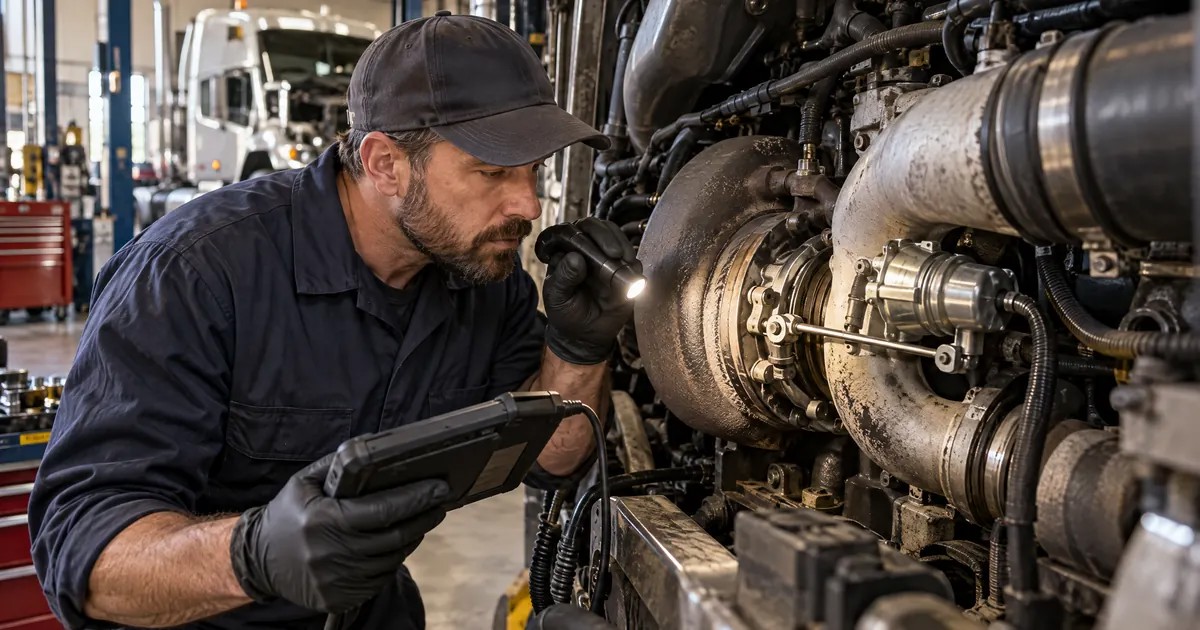
Your turbocharger is doing serious heavy lifting every time you press the accelerator. It pushes more air into the engine, giving your diesel the power and efficiency it is famous for. The turbo actuator is the component that manages boost pressure by controlling the variable geometry vanes inside the turbocharger. When it starts to fail, you feel the difference quickly. If you have been noticing turbo actuator failure symptoms but are not sure exactly what you are dealing with, this guide is here to help.
The actuator can fail mechanically, electrically, or due to carbon buildup restricting the vanes from moving properly. Each type of failure tends to show up in similar ways from the driver’s seat. Here is how to read what your truck is telling you.
Significant Loss of Power
One of the first turbo actuator failure symptoms you will notice is a noticeable drop in engine power. Your truck may feel sluggish when accelerating, especially under load. The engine is not receiving the boost pressure it needs to perform efficiently. This is especially apparent on inclines, when merging onto highways, or when pulling a heavy trailer. If your pulling capacity seems to have dropped without explanation, the turbo system deserves a look. A commercial vehicle repair assessment can help identify the problem.
Engine Enters Limp Mode
When the ECU detects abnormal boost pressure, it may activate limp mode to prevent further engine damage. Limp mode severely limits your power output and maximum speed. If your truck suddenly feels like it has been replaced with something dramatically underpowered, a failed turbo actuator is a very likely explanation. This is your truck protecting itself, not a condition you should try to drive through. Learn more about why a truck goes into limp mode.
Check Engine Light and Fault Codes
Turbo actuator failures almost always trigger the check engine light. Common associated codes include P0234 for overboost conditions and P0299 for underboost. You may also see codes related to variable geometry turbo (VGT) position errors. These codes confirm a turbo system issue and help narrow down whether the problem is mechanical, electrical, or sensor-related. A scan tool is your best friend for diagnosing turbo actuator failure symptoms. Where an electrical fault is suspected, truck electrical repair may be needed.
Abnormal Exhaust Smoke
When the actuator fails and boost pressure becomes unregulated, combustion becomes inconsistent. Over-fueling due to excessive boost can produce heavy black smoke. Oil being drawn into the intake due to pressure imbalances can create blue or bluish-white exhaust. If your exhaust color has changed from normal, treat that as a serious diagnostic signal.
Worsening Fuel Economy
Because the engine is not receiving properly managed boost pressure, it has to work harder than it should to produce the same output. This inefficiency hits you at the fuel tank. A noticeable drop in fuel economy without any obvious change in routes, loads, or driving habits is one of the more easily overlooked turbo actuator failure symptoms. Track your fuel consumption and take unexpected drops seriously.
What Causes a Turbo Actuator to Fail?
Carbon buildup on the variable vanes is among the most common causes, especially in trucks that regularly run short routes without reaching full operating temperature. A diesel engine needs to fully warm up to burn off the carbon deposits that accumulate inside the turbo over time. Electrical failures in the actuator motor, damaged linkage, and general wear from high mileage also contribute to premature failure.
If any of these turbo actuator failure symptoms sound familiar, do not wait for things to deteriorate further. The technicians at Avanti Fleet in Vancouver, WA specialize in diesel diagnostics and turbocharger repair, available 24 hours a day.
You can call the team today and get your truck back to full performance.