
Blogs
Can You Leave A Diesel Truck Running While Fueling?

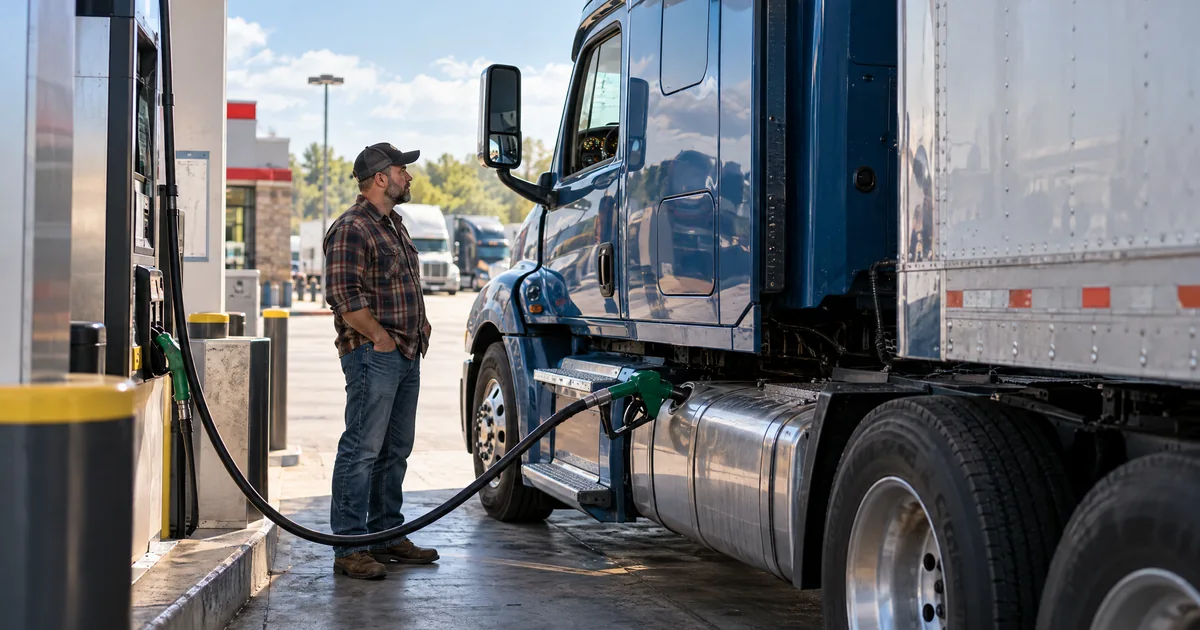
It’s a question that comes up at truck stops constantly, and you’ll get different answers depending on whom you ask. Some drivers always shut down before touching the fuel nozzle. Others idle through a fill every time without giving it a second thought. And somewhere in between is a real answer that actually accounts for both the practical realities of trucking and the legitimate safety concerns that underpin the debate.
Whether you can leave a diesel truck running while fueling is a matter of habit or a genuine question you’ve been wondering about, it’s worth understanding the facts behind the practice. There are regulations, there are fuel station policies, and there are real-world considerations that all factor into what the right call actually is. Let’s take a closer look at this debate and try to end it completely.
What Fuel Station Policies Actually Say
Most commercial fuel stations and truck stops post their own policies on fueling, and the majority of them require engines to be shut off before fueling begins. This isn’t an arbitrary rule. It comes from fire safety regulations and liability considerations that fuel station operators are required to follow under local fire codes and environmental regulations. If a station’s posted signage or pump instructions say to shut the engine off, you’re expected to comply regardless of your personal habit or how routine the task feels.
The Physics of Diesel and Fire Risk
Diesel fuel has a significantly higher flash point than gasoline, around 125 to 180 degrees Fahrenheit depending on the formulation, compared to gasoline’s flash point below minus 40 degrees Fahrenheit. This means diesel vapor is far less likely to ignite under normal ambient conditions than gasoline. The practical risk of a diesel truck engine causing a fuel ignition event during fueling is considerably lower than the equivalent scenario with a gasoline vehicle. This is part of why can you leave a diesel truck running while fueling is a genuine gray area rather than an obvious safety violation in many drivers’ minds. However, that still doesn’t change the fact that diesel is still flammable, and taking the chance that it will not happen loses against the argument of shutting it off while refueling,
Static Discharge and Fuel Spill Risks
The more relevant concern during fueling involves static electricity and the risk of fuel spills. Running equipment creates electrical activity, and while this doesn’t typically cause issues with diesel, it’s still a variable that fuel station operators account for in their policies. A fuel spill near any running engine also presents a risk, diesel’s higher flash point notwithstanding. Best practice at any commercial fueling point is to be attentive, not rushed, and to follow whatever the posted requirements specify. It takes a few seconds to turn your truck back on, so it’s better to be safe than sorry.
Reefer Units and APUs Are a Different Consideration
Many drivers who ask “can you leave a diesel truck running while fueling” are specifically thinking about their reefer unit or APU rather than the main engine.
These systems typically run from a separate fuel tank and have separate fueling procedures.
Operating a reefer unit on a separate tank while fueling the main tractor tank is a different situation than running the primary engine during tractor fueling. Check your specific reefer unit’s fueling procedures and the station’s posted policy for the clearest guidance.
Keep Your Fuel System in Top Shape
Regardless of your fueling practice, keeping your truck’s fuel system and related components maintained properly is what prevents fuel delivery issues from becoming bigger problems.
If you need help with any fuel system maintenance or repair, we’re the best technicians to call. Avanti Fleet provides filter replacement and related mechanical work for commercial trucks throughout Vancouver and the Portland metro.
Contact us to schedule fuel system maintenance and keep your truck operating efficiently at every fill.