
Blogs
Signs Of A Wheel Bearing Going Bad In Truck

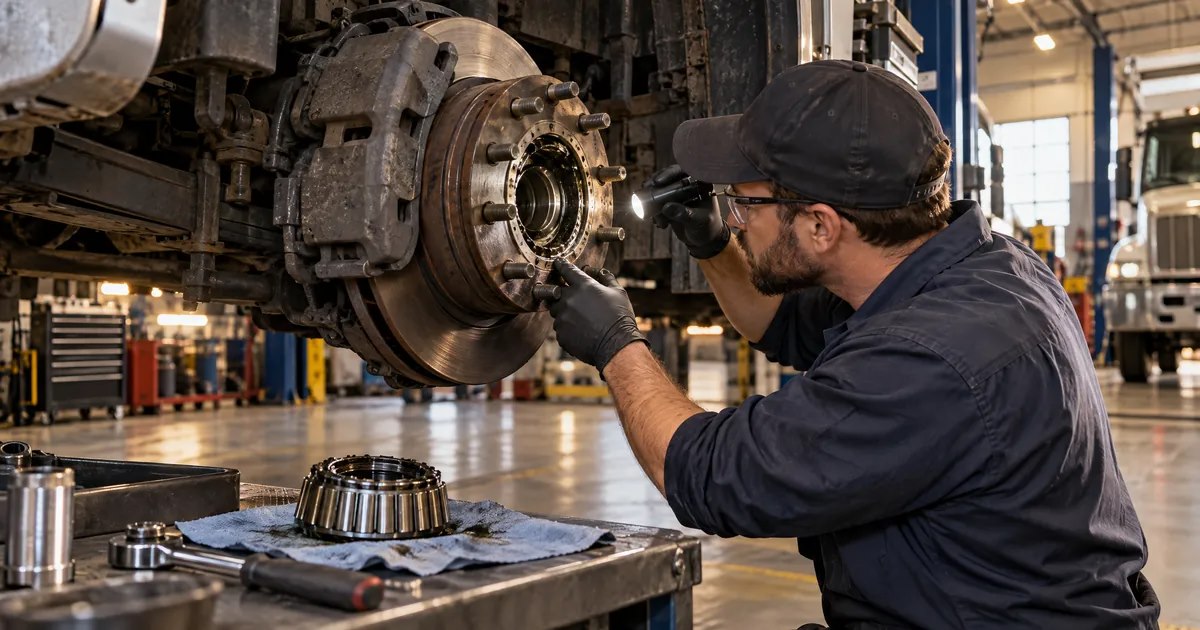
A wheel bearing failure on a commercial truck isn’t just a mechanical inconvenience. It’s a safety event that can result in a wheel separation at highway speed, and that outcome puts everyone on the road in serious danger. The good news is that wheel bearings rarely fail without warning. They almost always give you signs before things get catastrophic.
Understanding the signs of a wheel bearing going bad in truck applications gives you the chance to catch the problem during an inspection rather than discovering it on the highway.
The Grinding or Humming Sound That Changes With Speed
The most recognizable of all signs of a wheel bearing going bad is a grinding, humming, or growling sound that increases in pitch or intensity as vehicle speed increases. This sound often changes character during lane changes or gentle turns because shifting weight loads the bearing differently. If the noise gets louder when you steer slightly to the left, the right-side bearings are more likely affected, and vice versa. This noise differs from tire noise, which stays consistent regardless of steering.
Vibration Through the Cab and Steering Wheel
Worn bearings let the wheel move more than it should, and that play turns into vibration you feel through the floor and steering wheel. It usually starts subtly and worsens with mileage. On a commercial truck, vibration from the steer axle comes through the steering wheel most clearly, while drive and trailer axle bearing noise tends to travel through the cab and seat.
Abnormal Tire Wear and Wheel Movement
Excessive bearing clearance changes how the tire contacts the road. A bearing that’s worn significantly allows the wheel to tilt slightly, and that tilt produces abnormal wear on one edge of the tire. If you notice rapid inside or outside edge wear on a tire that doesn’t explain with alignment measurements, checking the bearing condition at that wheel end is worth adding to the diagnostic process. On the highway, a slow wobble at the steer axle is a particularly urgent sign of a wheel bearing going bad in truck applications and warrants stopping.
Heat at the Hub After Operation
After a run, carefully checking hub temperature by holding your hand near, not on, each wheel end can reveal unusual heat buildup. A bearing that’s failing generates friction, and that friction produces heat beyond what normal bearing operation creates. One hub that’s noticeably hotter than the others on the same axle after equivalent operation suggests the bearing at that location is working harder than it should be.
Don’t Wait on Wheel Bearing Symptoms
Signs of a wheel bearing going bad in truck operation that go ignored long enough result in a wheel separation, one of the most dangerous events possible on a highway. Avanti Fleet‘s technicians inspect, measure, and replace wheel bearings for commercial trucks throughout Vancouver and the Portland metro, providing thorough wheel end service that catches issues before they become emergencies.
Give us a call for a wheel end inspection at the first sign of abnormal noise or vibration.