
Blogs
Why Is My Semi Truck Coolant Reservoir Bubbling?

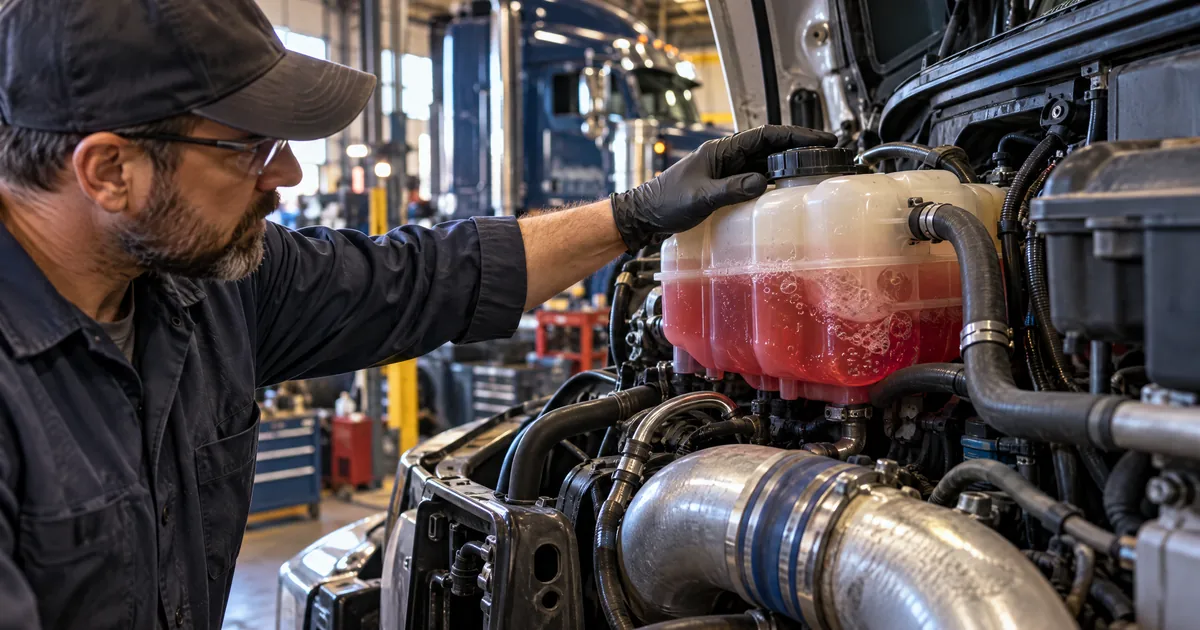
Automobiles are, all in all, machines. And as machines, they also face the issues of friction and overheating. Luckily, we have advanced to a time when we invented coolants that help regulate temperature and prevent these complicated machines from overheating. However, issues can still happen. For instance, you pop the hood for a routine check and notice the coolant reservoir bubbling, almost like something is boiling inside it, even though the engine temperature gauge didn’t show anything alarming during your last run. It’s the kind of thing that makes your instincts say something is wrong before you’ve even had a chance to think it through.
A coolant reservoir bubbling situation in a diesel truck should never be dismissed as a quirk or written off as normal. We’ve seen it happen a lot. It usually indicates that air is entering a sealed system it should not be able to reach. While the reasons why tis happens can be manageable, they can also be a lot more serious. Here’s exactly what the causes look like and how to tell them apart.
Why Bubbling Happens in a Closed Cooling System
Before we get into the nitty-gritty of it all happening, there’s something you must know first to understand the causes better: The WHY.
Your truck’s cooling system is a pressurized, sealed loop. Coolant circulates through the engine, absorbs heat, travels to the radiator to release it, and returns. Because the system is sealed and pressurized, air shouldn’t have a path in. When it does, that air accumulates and creates pockets that disrupt circulation. As air is pushed into the reservoir, you see it as bubbling in the coolant reservoir, which is the visual symptom of pressurized gas reaching fluid that should only contain liquid. Now let’s look at what could cause it.
What Causes Coolant Reservoirs to Bubble in a Semi-Truck?
Air Pockets After Service Work
One of the less alarming causes of coolant reservoir bubbling is trapped air from recent cooling system maintenance. Any time you drain and refill coolant, replace a water pump, or service hoses, air can get into the system if it’s not properly bled during refill. This air circulates until it finds the reservoir and exits as bubbles. If you recently had cooling system work done and are now seeing bubbles, air bleeding is the first thing to rule out before assuming something serious has failed.
A Failing Pressure Cap
Next, the issue could also arise from a failing pressure cap. Your coolant reservoir cap maintains the pressurization that keeps the system sealed and raises the boiling point of your coolant. When the cap’s pressure seal fails, the system can’t hold proper pressure, fluid reaches its boiling point more easily, and you see coolant reservoir bubbling that looks like actual boiling even when the temperature gauge reads normal. A pressure cap is one of the least expensive components on a diesel engine. Testing it with a pressure gauge before assuming a larger problem is always worth doing first.
The Blown Head Gasket Warning
This is the cause no diesel truck owner wants to confirm. When a head gasket fails internally, combustion gases from the cylinders can push directly into the cooling passages. That pressurized exhaust gas travels to the reservoir and creates persistent, often rapid bubbling. The giveaway signs that your coolant reservoir bubbling comes from a head gasket failure include white smoke from the exhaust, a milky or creamy appearance in the oil, coolant that appears to be disappearing without a visible external leak, and overheating that occurs despite adequate coolant level. A combustion leak test using a block test kit can confirm this by detecting hydrocarbons in the coolant.
Don’t Let It Sit Without a Diagnosis
A coolant reservoir bubbling that isn’t caused by something minor will only get worse under continued operation. If you’re seeing these symptoms, it’s crucial that you get them checked out by our diesel technicians at Avanti Fleet. We can help diagnose and repair cooling system issues for commercial trucks throughout Vancouver and the Portland metro, including pressure testing, head gasket evaluation, and water pump and thermostat service.
Or you can also call us in advance to learn more about why your semi-truck’s coolant reservoir constantly bubbles before it escalates into engine damage.